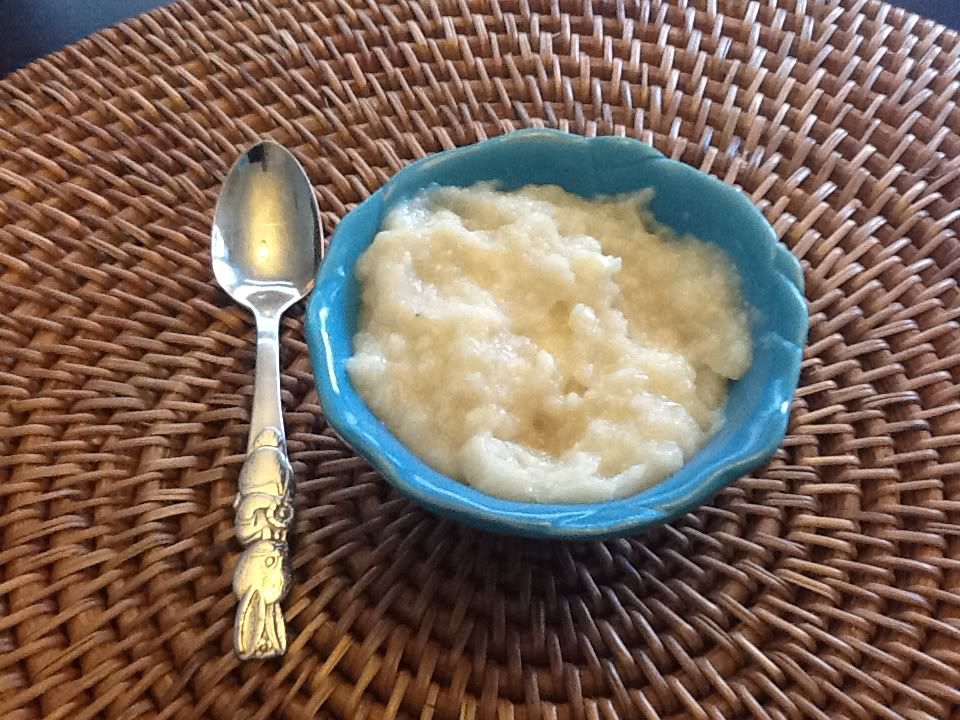
Dehydrated sprouted brown rice baby cereal. Sounds much too complicated to attempt, doesn't it? I am here to tell you that all it really takes is a little forethought and a tad bit of planning and you can make this nourishing, nutritious whole grain cereal for your little one. Four years ago, I had my first son Jayden, and my whole world changed. Before becoming a mother I had always taken pretty good care of myself and made healthful choices. I was fortunate to grow up with a mom who cared about nutrition and thankfully I continued to live that way once I was on my own. But now I was a mommy. I had created a perfect little being and I was intent on keeping him that way, so my health conscious attitude went into overdrive. I began scrutinizing every morsel of food, every drop of water, every product that entered our home.
So when it came time for Jayden to start solid food, it was a given that I would be making it myself. I made every bite, he never had food from a jar, not even once. I knew I was giving him the most nutritious, freshest food I could and that gave me an immense sense of satisfaction. I was given this perfect, unblemished little boy and the last thing I was going to do was pollute his new system with garbage. And so began my journey of clean living and of ensuring that I was providing the best nutritional foundation I could for our son.
Fast forward three and a half years, and our family was blessed again with another perfect little boy. Now a busy mom, his infant days seemed to fly by. It really is true what they say, once you have one, the next grow up twice as fast. Long gone are the lazy days of one baby, where I was able to soak up every minute, capture every first on film, stare longingly as my baby slept, and actually had the luxury of utilizing nap time to accomplish things . Now our days are packed to the max with school, soccer, tee ball, errands, and even the occasional attempt to maintain a clean household! I knew once Dylan was born that this time around was not going to be the same. There just aren't enough hours in the day. Amidst all the craziness I knew there was one thing I wouldn't be sacrificing, no matter how busy our days got, and that was his nutrition. I would be making all his food too, just like his big brother. I admit I was a little concerned that I wouldn't find the time for it, squeezing in one more thing into my schedule seemed impossible. But as Dylan neared his six month birthday, I reminded myself that if it is important, you find a way. So here I am, embarking on homemade baby food, round #2!!
I have learned a great deal about nutrition since giving birth to Jayden, and one of the most compelling bits of information was definitely the importance of soaking grains. Soaking and sprouting grains has been done for thousands of years, in every culture. Sadly, like many time honored traditions, this one has fallen by the wayside for us busy Americans. Most of us barely have time to put a hot meal on the table, let alone even entertain the idea of soaking and sprouting our grains beforehand. I too was skeptical that I could fit yet another thing into our daily lives, but once I learned about all the benefits I knew it was something I had to do. As I began my sprouting adventure, I quickly realized that all it takes is a little planning. And like I said before, if something is worth doing, you make time for it.
Why soak or sprout your grains you ask? It's pretty simple really. All grains are seeds and contain a substance called phytic acid. Basically, it's the seed's shield, that protects it until it conditions are right for it to be germinated and become a living plant. These enzyme inhibitors, wreak havoc in our systems when we ingest them. They are toxic, and actually prevent us from absorbing all the precious minerals and vitamins the grains contain, namely calcium, iron and magnesium and also make the grain difficult to digest. Not only is consumption of phytic acid harmful, but the process of soaking and sprouting the grain actually makes it more nutritious. Once grains have been sprouted they are alive and rich in bioavailable vitamins, minerals, amino acids, proteins and phytochemicals, all things that are essential for a plant to grow. The sprouting process unlocks the true nutritional value lying in these seeds and the vitamin content of some seeds can skyrocket to twenty times the original amount within a few days of sprouting. So simply put, eating grains, (or any nut, seed, or bean) without soaking and sprouting is detrimental to our health, which is so ironic, since the reason many of us eat them is to lead a healthier life. But the simple act of sprouting reduces or eliminates the phytic acid and increases the overall nutritional profile of the seed as well as aiding in digestion.
That being said, when it came time to start Dylan on grain cereal, I knew I would be sprouting grains to make my own sprouted grain cereals. Not only did the benefits of sprouting make it totally worthwhile, but the idea that consuming unsprouted grains leads to malabsorption of vital minerals made it essential that I do so. Iron is a precious commodity for babies, (especially exclusively breastfed ones, which my baby is) and their iron reserves start to deplete around the six month mark, right around the time they start on solid food. Armed with all my sprouting knowledge, I wasn't about to feed him something that was going to keep him from absorbing vitamins and minerals, after all, I am trying to provide him with those, not take them away. And so began my sprouted cereal journey.
In theory it all sounded so good, yet seemed so daunting. I mean, who are we kidding, dehydrated sprouted brown rice cereal sounds like something you can only buy in a store, not make in your own kitchen. I am here to tell you that you can easily prepare this nutritious first food for your little love, without any sweat, blood, or tears. All you need is a wee bit of planning, and a few kitchen gadgets don't hurt either. I am fortunate to have a dehydrator at my disposal, (a recent gift from my wonderful hubby) which is indispensable for this recipe. Why can't you use your oven you ask? Unfortunately, most ovens only get down to 170 degrees, 150 if you're lucky, and that temperature is just too high to dry grains. It will dehydrate them, but in the process, the high heat will kill all the beneficial enzymes we are trying to preserve. I have heard of people using the oven by turning it on it's lowest setting, and then leaving the door partially open. While this may work, it is not the most effective or safest method of dehydrating, not to mention a huge waste of energy! I myself have not used this method, and cannot attest to it's effectiveness.
Sprouted Brown Rice Cereal
2 c organic brown rice (any brown rice will sprout, but short grain tends to sprout in less time)
warm, filtered water to cover
wide mouth mason jars
sprouting screens or cheesecloth
Begin by rinsing the rice well under running water. Pour rice into jar and cover with water. Cover with lid of your choice. I use cheesecloth secured with a rubber band.
Allow to soak 8-24 hours ( I find that overnight is the best and easiest way for me.)
In the morning, rinse and drain rice well. Invert jar over a bowl at an angle, allowing for water to drain and air to circulate. Leave in an area away from direct sunlight. Rinse and drain at 8-12 hour intervals, until small sprouts appear.
I like my rice with small tails, about an 1/8th of an inch. Your rice is now alive and a nutritional powerhouse!!
Place sprouted rice onto fruit leather trays and put in your dehydrator at 95- 110 degrees. Dry for 12-24 hours until rice is completely dry. Mine are usually ready after about 10-12 hours. At this point, the sprouted rice can be ground into flour. You will want to grind your rice into a fine powder. I like to grind all the rice and then label and store the flour in the freezer. Alternately, you can freeze the rice as is, and grind as you need it. Whole grain flours, and especially sprouted ones can turn rancid very quickly and proper storage is essential. When ready to use, just measure out desired amount and keep the rest in the freezer. Don't forget, sprouted grain flours are great for use in baking breads, making tortillas, crackers, pizza doughs, or any other baked good, not just for making baby cereal!
Now for the cereal. I only make one or two servings at at time because baby cereals tend to get gelatinous if made and reheated.
1/4 c sprouted rice flour
2 c water
Bring water and rice flour to a boil with lid on. Reduce heat to low and simmer for 15 minutes, whisking occasionally to reduce clumping. If cereal is too thick for your baby's liking, add more water, breast milk, or formula to thin to desired consistency.
Sprouted brown rice cereal is perfect by itself as a first food or mixed with other fruit or veggie purees.


